Category: Uncategorized

  • What began as a standard late-night segment instantly turned explosive when Jimmy Kimmel welcomed Arnold Schwarzenegger and calmly set the stage.

    TRUMP GOES NUTS AFTER JIMMY KIMMEL AND ARNOLD SCHWARZENEGGER QUIETLY TEAR HIM APART ON LIVE TV

    What began as a routine late-night TV appearance quickly turned into one of the most uncomfortable unmaskings Donald Trump has faced in years. Without shouting, insults, or staged outrage, Jimmy Kimmel and Arnold Schwarzenegger dismantled Trump’s carefully constructed image in real time.

    The segment didn’t rely on viral anger or theatrical confrontation. Instead, it used calm delivery, timing, and contrast—leaving viewers with the sense that something far more damaging than a joke had just happened.

    Jimmy Kimmel Live Returns Arnold Schwarzenegger

    Jimmy Kimmel set the tone by letting irony do the heavy lifting. Rather than attacking Trump head-on, he calmly walked through contradictions Trump has spent years trying to bury, from unanswered questions about government transparency to the endless deflections surrounding high-profile investigations.

    The humor landed not because it was loud, but because it was patient. Each line invited the audience to connect the dots themselves, slowly revealing how fragile Trump’s narratives become when repetition and outrage are removed from the equation.

    Arnold Schwarzenegger’s presence amplified the effect in a way few guests could. As a global icon who achieved success in entertainment, business, and politics, Arnold didn’t need to posture or compete.

    His relaxed confidence and emphasis on inclusive leadership stood in sharp contrast to Trump’s dominance-based persona. Without ever directly attacking Trump, Schwarzenegger embodied an alternative model of strength—one rooted in discipline, accountability, and self-criticism—quietly undercutting Trump’s self-image.

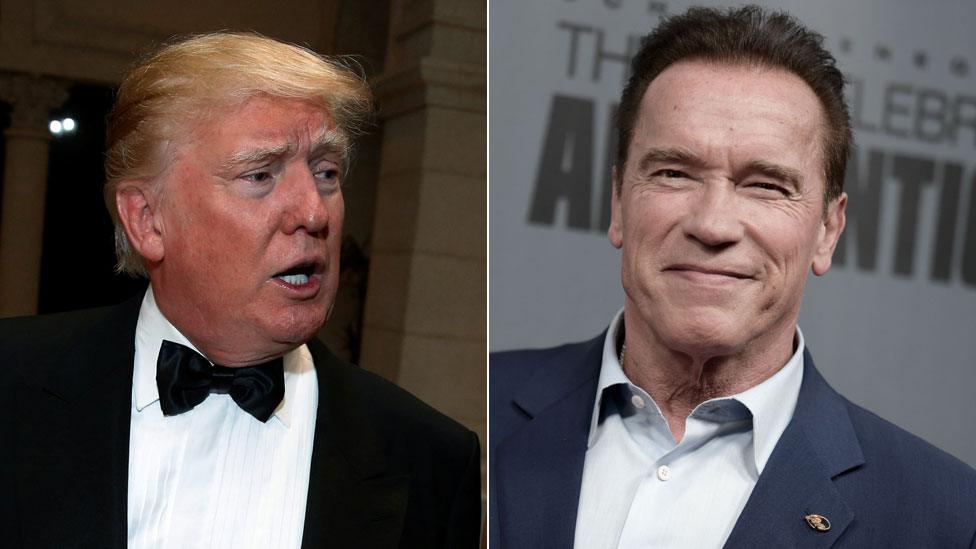
    Donald Trump taunts Schwarzenegger over Celebrity Apprentice ratings - BBC  News

    What made the moment especially powerful was its lack of hostility. Trump thrives on confrontation because it allows him to frame criticism as persecution. But here, there was no villain to fight, no angry mob to rally against.

    Kimmel and Schwarzenegger treated Trump’s mythology like a fragile artifact, gently tapping it until the hollowness became obvious. In that neutral environment, bravado had to stand on its own—and it didn’t.

    As clips spread online, viewers noticed the shift in audience reaction. The laughter wasn’t driven by punchlines anymore, but by recognition.

    People weren’t laughing at Trump; they were laughing at the realization that the performance they’d seen for years depended entirely on constant reinforcement. Once that reinforcement paused, the illusion faded. The result felt more unsettling than any rant, because it invited reflection rather than outrage.

    In the end, this wasn’t a viral takedown fueled by chaos—it was something more dangerous for Trump’s brand. Jimmy Kimmel and Arnold Schwarzenegger showed that the most effective exposure doesn’t need noise, insults, or spectacle. By refusing to escalate, they changed the rules of engagement and left Trump without his usual defenses. The moment served as a reminder that the loudest political personas often collapse under the quietest scrutiny—and that kind of exposure lingers long after the laughter stops.

  • Australia Breaks With the U.S. — Carney Invited to Address Parliament A quiet but consequential shift is unfolding in Canberra

    Australia Breaks With the U.S. — Carney Invited to Address Parliament A quiet but consequential shift is unfolding in Canberra.

    Australia has taken a noticeable step away from Washington’s line, signaling a recalibration in how it balances alliance loyalty with national interest.

    The invitation extended to Mark Carney to address Parliament immediately elevated the move from diplomacy to declaration. Analysts say the invitation is no coincidence.

    Carney’s presence positions Canada as a reference point for middle powers seeking autonomy without rupture — countries willing to cooperate with the U.S., but no longer willing to default. For Australia, the message is subtle but clear: alternative voices now matter in shaping the Western order.

    Timing gives the moment real weight. As global blocs harden and U.S. influence faces quiet resistance from allies, this break could mark a turning point.

    What looks symbolic today may evolve into coordination tomorrow — and Carney’s appearance suggests Canada is being pulled into a larger realignment already underway.

  • Epstein Files Reignite Trauma for Survivors, Raising Questions About Accountability and Disclosure.

    NEW YORK — For survivors of sexual abuse linked to Jeffrey Epstein, the recent release of millions of government documents was expected to offer transparency and accountability. Instead, several survivors say it has reopened wounds, exposed private information, and raised new concerns about how institutions charged with protecting victims are handling one of the most consequential abuse scandals in modern history.

    Among those speaking publicly is Anushka de Georgia, who has described the document release as deeply retraumatizing. In interviews and public statements, she and other survivors say identifying details — including addresses, signatures, and personal records — appeared in the released materials despite long-standing assurances that such information would be carefully redacted.

    “You can’t put that back,” Ms. de Georgia said, describing the moment she learned that sensitive personal data tied to her testimony had become publicly accessible. Like many survivors, she said she had cooperated with investigators and courts under the expectation that her privacy would be protected.

    The Department of Justice has acknowledged that errors occurred during the document release and has since removed and revised thousands of pages. Officials said the process involved an extraordinary volume of records and that corrections were underway. Survivor advocates, however, argue that the mistakes reflect systemic failures rather than isolated oversights.

    Legal experts note that protecting victim identities is a foundational obligation in cases involving sexual exploitation, particularly when survivors were minors at the time of abuse. “This is not a novel challenge for prosecutors,” said one former federal official familiar with such cases. “Redaction is basic, but the consequences of getting it wrong are severe.”

    The renewed scrutiny comes years after Epstein’s death in federal custody in 2019 and the subsequent prosecution of Ghislaine Maxwell, who was convicted in 2021 of child sex trafficking-related offenses and sentenced to federal prison. While Ms. Maxwell’s conviction was seen by many survivors as a measure of accountability, it did not end the legal or emotional toll.

    Ms. de Georgia testified during the Maxwell proceedings, recounting experiences that began when she was a teenager and describing a pattern of grooming, coercion, and abuse. She has emphasized that her decision to speak publicly was not made lightly and followed years of anonymity, therapy, and recovery.

    Survivors and their advocates say the latest developments underscore a persistent imbalance: victims are repeatedly asked to relive trauma in service of justice, while institutions struggle to meet their most basic responsibilities.

    The release of the Epstein-related files has also reignited debate over how much information remains undisclosed. Lawmakers and transparency advocates have noted that the recent disclosure represents only a portion of the total records compiled across years of investigations and litigation. The Justice Department has said it does not plan additional large-scale releases, a position that has frustrated survivors seeking fuller accounting.

    Some survivors fear that the fragmented release of documents — mixing verified records with uncontextualized material — risks fueling misinformation that can be weaponized against those who come forward. “When inaccurate narratives circulate, they don’t just confuse the public,” Ms. de Georgia said. “They actively undermine survivors’ credibility.”

    Beyond the legal questions, survivors describe ongoing personal consequences: harassment, threats, and disruptions to family and professional life. Several have said that public exposure has forced relocations, heightened security concerns, and renewed struggles with post-traumatic stress.

    Mental health specialists note that such outcomes are common when survivors are thrust back into public view without adequate safeguards. “Trauma doesn’t exist in the past tense,” said a clinician who works with abuse survivors. “Institutional actions in the present can either support healing or compound harm.”

    Despite these challenges, survivors like Ms. de Georgia say they remain committed to speaking out. They point to those who are no longer alive to tell their stories and describe their advocacy as a form of responsibility as much as resistance.

    The broader implications extend beyond a single case. The Epstein scandal has become a measure of how the justice system handles powerful offenders, complex networks, and vulnerable victims. Each misstep, survivors argue, risks reinforcing the very dynamics that allowed abuse to persist for years.https://images.openai.com/static-rsc-3/3i4k0PQdsOqZkw_N3CJLgBEyA2RFuP9VayeZkQeQpAd-UFNGbCzK6gUO_EAxO-2ayomel0vnttMFZxoAcmlMWEiDV8vvym435K8ydIAkwbc?purpose=fullsize&v=1

    For now, the focus among survivors is not on political outcomes or public spectacle, but on accountability and reform: stronger protections for victim data, clearer standards for document releases, and meaningful inclusion of survivor voices in decisions that affect them.

    “This is not about headlines,” Ms. de Georgia said. “It’s about whether the people who were harmed are finally treated as human beings — not collateral damage.”

    As investigations fade from the front pages and legal proceedings conclude, survivors say their lives do not return to normal. For them, the question remains whether the institutions that failed them once are willing — or able — to do better now.

  • BREAKING: Donald Trump is facing what insiders describe as nightmare news as the Clinton family signal they are fully backing the public release of Epstein-related materials.

    A Willingness to Testify, and the Precedent It Sets

    For decades, the American presidency has been wrapped in a thick layer of institutional deference. Former presidents have typically resisted appearing before Congress, citing separation of powers, executive privilege, or long-standing norms meant to protect the office rather than the individual. That tradition is now being tested.

    https://images.openai.com/static-rsc-3/HVuyWMmbWIN20JRzJBStKblPhoy_WD9gtAH_2qs-PsjK_g07RUmf_pXjK5i6uVJMyFvhWuAgHS7eX3NpX1M47tBvnOiZlIogvoLtpK8l2G0?purpose=fullsize&v=1

    This week, Bill Clinton and Hillary Clinton signaled not only their willingness to comply with subpoenas from the House Oversight Committee, but their preference to do so publicly, with cameras rolling. The move has unsettled Republicans who initially framed the subpoenas as a political trap — and it has clearly rattled Donald Trump, who has responded with an unusual burst of praise for his former rival.

    At issue is Congress’s investigation into the handling and release of documents connected to Jeffrey Epstein, whose crimes and network of associations continue to cast a long shadow across politics, finance and media. Republicans on the Oversight Committee issued subpoenas to the Clintons earlier this year, seemingly expecting resistance that could be portrayed as evasive or elitist.

    Instead, the Clintons flipped the script.

    https://images.openai.com/static-rsc-3/eUsMTqEai6vFtaijfoqD09bG4KuD8jVkKRoCc5fAkk3ItgPRCy4MnKc6_UyouQUP0Iowk-lCjC4qyyQI-sd4G1ZTu9HhDrozIHpRtz70KFM?purpose=fullsize&v=1

    In posts and statements, Bill Clinton dismissed the idea of a closed-door deposition as a “kangaroo court,” while Hillary Clinton challenged lawmakers to hold a full public hearing, arguing that transparency demands nothing less. “Cameras on,” she wrote. “We will be there.”

    That response has forced a recalculation. Public hearings bring risks for witnesses, but they also shift the burden of accountability onto lawmakers themselves. Questions, follow-ups, and political motives are exposed in real time. The stage cuts both ways.

    Republicans now face an awkward dilemma: proceed publicly and risk losing control of the narrative, or retreat to closed sessions and appear to contradict their own calls for transparency. Either choice undercuts the original strategy.

    Beyond the immediate political chess match, the episode raises a more consequential issue: precedent.

    Former presidents have historically avoided compelled testimony. Thomas Jefferson famously resisted congressional questioning, opting instead to respond in writing. Abraham Lincoln never testified under oath. Even during the Watergate era, Richard Nixon resigned before facing congressional testimony. The few exceptions — such as Harry Truman’s voluntary appearance in 1953 — were just that: voluntary.

    By agreeing to testify under oath, Bill Clinton is effectively lowering a barrier that has long protected former occupants of the Oval Office. Legal scholars note that while no single appearance rewrites constitutional doctrine, norms matter — and once broken, they are difficult to restore.

    “This opens the door,” one former federal prosecutor said. “Not just for Clinton, but for future Congresses looking at former presidents of either party.”

    That possibility appears to be weighing on President Trump. Asked about the Clintons’ upcoming testimony, he called it “a shame” and unexpectedly praised both Bill and Hillary Clinton, describing her as “very capable” and him as someone who “understood” Trump. The tone stood in sharp contrast to Trump’s usual rhetoric toward political opponents.

    https://i.abcnewsfe.com/a/1b6a9d15-8e3f-4a7d-b42d-880ce6bca542/clinton-3-gty-thg-240819_1724119085192_hpMain_16x9.jpg?w=992

    Democrats quickly noticed. Several lawmakers pointed out that Trump’s sudden warmth toward the Clintons coincided with warnings from Democratic leaders that if former presidents are expected to testify about Epstein-related matters, Trump himself could face similar scrutiny — either now or after leaving office.

    The president has previously refused to testify in congressional investigations, including those related to January 6. While sitting presidents enjoy significant legal protections, the willingness of a former president to appear voluntarily weakens the argument that such testimony is unthinkable or institutionally improper.

    The international implications are also being closely watched. Epstein’s network extended beyond U.S. borders, touching figures in Europe and the Middle East. In Britain, renewed pressure has emerged on Prince Andrew to answer questions publicly. While Congress has no authority to compel foreign nationals, the optics matter. If a former U.S. president testifies openly, the moral argument for silence elsewhere becomes harder to sustain.

    For the Clintons, the calculation appears straightforward. Bill Clinton’s name has surfaced in Epstein-related documents; he has acknowledged past associations and says he welcomes questioning. Hillary Clinton, who does not appear in the files in the same way, has argued that public testimony would expose the weakness of dragging spouses into investigations by association alone.

    For Republicans, the move threatens to backfire. What began as an effort to shift political pressure may instead keep Epstein — and questions about who is being protected, and why — firmly in the headlines.

    And for President Trump, the implications are uncomfortable. His Justice Department has been accused by critics of slow-walking document releases and tightly controlling access. A high-profile public hearing, featuring former political rivals under oath, risks refocusing attention on how often Trump’s own name appears in the same materials.

    Ultimately, this moment is less about any single witness than about institutional boundaries. Deference to the presidency has long been treated as a safeguard for democracy. But critics argue it has also shielded powerful individuals from accountability.

    By agreeing to testify publicly, Bill Clinton has challenged that balance. Whether history judges the move as courageous transparency or a dangerous erosion of norms may depend on what follows — and on whether the standard is applied evenly.

    For now, one thing is clear: a line that once seemed immovable has been crossed, and Washington is still adjusting to the consequences.

  • BREAKING: A survivor has come forward in a powerful new interview with Midas Touch Network, sharing previously unheard personal experiences related to the long-running Jeffrey Epstein case.

    Epstein Files Reignite Trauma for Survivors, Raising Questions About Accountability and Disclosure

    NEW YORK — For survivors of sexual abuse linked to Jeffrey Epstein, the recent release of millions of government documents was expected to offer transparency and accountability. Instead, several survivors say it has reopened wounds, exposed private information, and raised new concerns about how institutions charged with protecting victims are handling one of the most consequential abuse scandals in modern history.

    Among those speaking publicly is Anushka de Georgia, who has described the document release as deeply retraumatizing. In interviews and public statements, she and other survivors say identifying details — including addresses, signatures, and personal records — appeared in the released materials despite long-standing assurances that such information would be carefully redacted.

    https://i.abcnewsfe.com/a/42a99969-5920-4b74-b1e4-925bc7243845/jeffrey-epstein-ap-bb-240104_1704394546015_hpMain_4x3.jpg

    “You can’t put that back,” Ms. de Georgia said, describing the moment she learned that sensitive personal data tied to her testimony had become publicly accessible. Like many survivors, she said she had cooperated with investigators and courts under the expectation that her privacy would be protected.

    The Department of Justice has acknowledged that errors occurred during the document release and has since removed and revised thousands of pages. Officials said the process involved an extraordinary volume of records and that corrections were underway. Survivor advocates, however, argue that the mistakes reflect systemic failures rather than isolated oversights.

    Legal experts note that protecting victim identities is a foundational obligation in cases involving sexual exploitation, particularly when survivors were minors at the time of abuse. “This is not a novel challenge for prosecutors,” said one former federal official familiar with such cases. “Redaction is basic, but the consequences of getting it wrong are severe.”

    The renewed scrutiny comes years after Epstein’s death in federal custody in 2019 and the subsequent prosecution of Ghislaine Maxwell, who was convicted in 2021 of child sex trafficking-related offenses and sentenced to federal prison. While Ms. Maxwell’s conviction was seen by many survivors as a measure of accountability, it did not end the legal or emotional toll.

    Ms. de Georgia testified during the Maxwell proceedings, recounting experiences that began when she was a teenager and describing a pattern of grooming, coercion, and abuse. She has emphasized that her decision to speak publicly was not made lightly and followed years of anonymity, therapy, and recovery.

    Survivors and their advocates say the latest developments underscore a persistent imbalance: victims are repeatedly asked to relive trauma in service of justice, while institutions struggle to meet their most basic responsibilities.

    The release of the Epstein-related files has also reignited debate over how much information remains undisclosed. Lawmakers and transparency advocates have noted that the recent disclosure represents only a portion of the total records compiled across years of investigations and litigation. The Justice Department has said it does not plan additional large-scale releases, a position that has frustrated survivors seeking fuller accounting.

    Some survivors fear that the fragmented release of documents — mixing verified records with uncontextualized material — risks fueling misinformation that can be weaponized against those who come forward. “When inaccurate narratives circulate, they don’t just confuse the public,” Ms. de Georgia said. “They actively undermine survivors’ credibility.”

    https://pyxis.nymag.com/v1/imgs/deb/215/92f9c4d96ddf74882493c62589be1575e0-maxwell-newsletter-1206.rsquare.w400.jpg

    Beyond the legal questions, survivors describe ongoing personal consequences: harassment, threats, and disruptions to family and professional life. Several have said that public exposure has forced relocations, heightened security concerns, and renewed struggles with post-traumatic stress.

    Mental health specialists note that such outcomes are common when survivors are thrust back into public view without adequate safeguards. “Trauma doesn’t exist in the past tense,” said a clinician who works with abuse survivors. “Institutional actions in the present can either support healing or compound harm.”

    Despite these challenges, survivors like Ms. de Georgia say they remain committed to speaking out. They point to those who are no longer alive to tell their stories and describe their advocacy as a form of responsibility as much as resistance.

    The broader implications extend beyond a single case. The Epstein scandal has become a measure of how the justice system handles powerful offenders, complex networks, and vulnerable victims. Each misstep, survivors argue, risks reinforcing the very dynamics that allowed abuse to persist for years.https://images.openai.com/static-rsc-3/3i4k0PQdsOqZkw_N3CJLgBEyA2RFuP9VayeZkQeQpAd-UFNGbCzK6gUO_EAxO-2ayomel0vnttMFZxoAcmlMWEiDV8vvym435K8ydIAkwbc?purpose=fullsize&v=1

    For now, the focus among survivors is not on political outcomes or public spectacle, but on accountability and reform: stronger protections for victim data, clearer standards for document releases, and meaningful inclusion of survivor voices in decisions that affect them.

    “This is not about headlines,” Ms. de Georgia said. “It’s about whether the people who were harmed are finally treated as human beings — not collateral damage.”

    As investigations fade from the front pages and legal proceedings conclude, survivors say their lives do not return to normal. For them, the question remains whether the institutions that failed them once are willing — or able — to do better now.

  • BREAKING: A survivor has come forward in a powerful new interview with Midas Touch Network, sharing previously unheard personal experiences related to the long-running Jeffrey Epstein case.

    BREAKING: A survivor has come forward in a powerful new interview with Midas Touch Network, sharing previously unheard personal experiences related to the long-running Jeffrey Epstein case.

    NEW YORK — For survivors of sexual abuse linked to Jeffrey Epstein, the recent release of millions of government documents was expected to offer transparency and accountability. Instead, several survivors say it has reopened wounds, exposed private information, and raised new concerns about how institutions charged with protecting victims are handling one of the most consequential abuse scandals in modern history.

    Among those speaking publicly is Anushka de Georgia, who has described the document release as deeply retraumatizing. In interviews and public statements, she and other survivors say identifying details — including addresses, signatures, and personal records — appeared in the released materials despite long-standing assurances that such information would be carefully redacted.

    https://i.abcnewsfe.com/a/42a99969-5920-4b74-b1e4-925bc7243845/jeffrey-epstein-ap-bb-240104_1704394546015_hpMain_4x3.jpg

    “You can’t put that back,” Ms. de Georgia said, describing the moment she learned that sensitive personal data tied to her testimony had become publicly accessible. Like many survivors, she said she had cooperated with investigators and courts under the expectation that her privacy would be protected.

    The Department of Justice has acknowledged that errors occurred during the document release and has since removed and revised thousands of pages. Officials said the process involved an extraordinary volume of records and that corrections were underway. Survivor advocates, however, argue that the mistakes reflect systemic failures rather than isolated oversights.

    Legal experts note that protecting victim identities is a foundational obligation in cases involving sexual exploitation, particularly when survivors were minors at the time of abuse. “This is not a novel challenge for prosecutors,” said one former federal official familiar with such cases. “Redaction is basic, but the consequences of getting it wrong are severe.”

    The renewed scrutiny comes years after Epstein’s death in federal custody in 2019 and the subsequent prosecution of Ghislaine Maxwell, who was convicted in 2021 of child sex trafficking-related offenses and sentenced to federal prison. While Ms. Maxwell’s conviction was seen by many survivors as a measure of accountability, it did not end the legal or emotional toll.

    Ms. de Georgia testified during the Maxwell proceedings, recounting experiences that began when she was a teenager and describing a pattern of grooming, coercion, and abuse. She has emphasized that her decision to speak publicly was not made lightly and followed years of anonymity, therapy, and recovery.

    Survivors and their advocates say the latest developments underscore a persistent imbalance: victims are repeatedly asked to relive trauma in service of justice, while institutions struggle to meet their most basic responsibilities.

    The release of the Epstein-related files has also reignited debate over how much information remains undisclosed. Lawmakers and transparency advocates have noted that the recent disclosure represents only a portion of the total records compiled across years of investigations and litigation. The Justice Department has said it does not plan additional large-scale releases, a position that has frustrated survivors seeking fuller accounting.

    Some survivors fear that the fragmented release of documents — mixing verified records with uncontextualized material — risks fueling misinformation that can be weaponized against those who come forward. “When inaccurate narratives circulate, they don’t just confuse the public,” Ms. de Georgia said. “They actively undermine survivors’ credibility.”

    https://pyxis.nymag.com/v1/imgs/deb/215/92f9c4d96ddf74882493c62589be1575e0-maxwell-newsletter-1206.rsquare.w400.jpg

    Beyond the legal questions, survivors describe ongoing personal consequences: harassment, threats, and disruptions to family and professional life. Several have said that public exposure has forced relocations, heightened security concerns, and renewed struggles with post-traumatic stress.

    Mental health specialists note that such outcomes are common when survivors are thrust back into public view without adequate safeguards. “Trauma doesn’t exist in the past tense,” said a clinician who works with abuse survivors. “Institutional actions in the present can either support healing or compound harm.”

    Despite these challenges, survivors like Ms. de Georgia say they remain committed to speaking out. They point to those who are no longer alive to tell their stories and describe their advocacy as a form of responsibility as much as resistance.

    The broader implications extend beyond a single case. The Epstein scandal has become a measure of how the justice system handles powerful offenders, complex networks, and vulnerable victims. Each misstep, survivors argue, risks reinforcing the very dynamics that allowed abuse to persist for years.https://images.openai.com/static-rsc-3/3i4k0PQdsOqZkw_N3CJLgBEyA2RFuP9VayeZkQeQpAd-UFNGbCzK6gUO_EAxO-2ayomel0vnttMFZxoAcmlMWEiDV8vvym435K8ydIAkwbc?purpose=fullsize&v=1

    For now, the focus among survivors is not on political outcomes or public spectacle, but on accountability and reform: stronger protections for victim data, clearer standards for document releases, and meaningful inclusion of survivor voices in decisions that affect them.

    “This is not about headlines,” Ms. de Georgia said. “It’s about whether the people who were harmed are finally treated as human beings — not collateral damage.”

    As investigations fade from the front pages and legal proceedings conclude, survivors say their lives do not return to normal. For them, the question remains whether the institutions that failed them once are willing — or able — to do better now.

  • 1 MIN AGO: Federal Court EXPOSES Melania Trump’s $100 Million Crypto Scheme — LAWSUIT Moves Forward!

    1 MIN AGO: Federal Court EXPOSES Melania Trump’s $100 Million Crypto Scheme — LAWSUIT Moves Forward!

    In a shocking twist that no one saw coming, former First Lady Melania Trump is at the center of a $100 million cryptocurrency scandal after a federal court unveiled stunning new evidence implicating her in a complex financial scheme. The revelations, which surfaced just hours ago, have stunned both the financial world and the public alike, as questions about her involvement in a secretive cryptocurrency venture come to light.

    While Melania Trump has largely stayed out of the public eye since leaving the White House, the latest court proceedings have thrown her back into the spotlight. The case centers around a now-defunct crypto project, TrumCoin, which was launched in secret by a mysterious group with ties to the Trump Organization, but it’s Melania’s name that has caught the attention of the media.

  • 🚨 Trump PANICS and BEGS as Congress DEMANDS His RESIGNATION! 🔥

    🚨 Trump PANICS and BEGS as Congress DEMANDS His RESIGNATION! 🔥

    In a rare moment of vulnerability, Donald Trump—a man who has long cultivated an image of unshakeable strength—has been caught “begging” his own party to salvage his political career. With impeachment resolutions ready to hit the floor and a cocktail of old and new scandals boiling over, a singular question haunts Washington: Will Trump choose a scorched-earth defense, or will he retreat like Richard Nixon before him?

    A Startling Confession from the “Tower” of Power

    The scene unfolded during a closed-door GOP meeting in early January 2026. Instead of his typical bravado regarding victory, Donald Trump issued a chilling and anxious warning to his colleagues: “You have to win the midterms… because if we fail, they will surely find a reason to impeach me. I’ll be impeached.”

    This is not the language of a President in control of the narrative. It is the distress signal of a leader who knows he is standing on a precipice. Trump understands that his power currently rests on a single “shield”: the Republican majority in the House. Should that shield shatter this coming November, a third impeachment is no longer a hypothetical—it is a preordained destiny.

    The “Dismantling” Strategy: Targeting the Cabinet First

    Democrats aren’t simply waiting for election day; they have launched a sophisticated tactical offensive: pressure high-ranking Cabinet officials to resign or face immediate impeachment.

    The primary target is currently Homeland Security Secretary Kristi Noem. Following a series of deadly shootings involving ICE agents in Minneapolis, Democratic lawmakers issued a brutal ultimatum: “Resign or be impeached.”

    Why target the Cabinet first? Political analysts suggest this is a psychological conditioning of the public. By framing Trump’s team as “corrupt and out of control,” Democrats are establishing a legal and political precedent. Once the “outer circle” is dismantled, Trump will be left entirely isolated within the White House. At that point, the pressure to resign may come not just from his rivals, but from weary allies within his own party.

    A “Mountain” of Evidence: From Jack Smith to the Epstein Files

    What makes this potential third impeachment far more perilous than the previous two is the sheer volume of evidence that has moved into the public domain:

    • Jack Smith’s Evidence: Federal prosecutors claim they possess evidence “beyond a reasonable doubt” regarding Trump’s alleged crimes.
    • The Epstein Files: Newly leaked documents have become a political nightmare, carrying allegations of high-level information suppression.
    • Policy Crisis: A string of executive orders struck down by courts and a disastrous government shutdown have eroded the confidence of swing voters.

    Trump is no longer fighting abstract accusations. He is facing specific data, recordings, and direct judicial rulings.

  • Congress DEMANDS Trump STEP DOWN After “NIGHTMARE” Evidence DROPS.

    CONGRESS DEMANDS TRUMP STEP DOWN AFTER “NIGHTMARE” EVIDENCE DROPS 

    Capitol Hill Thrown Into Turmoil as Lawmakers Clash Over Explosive Claims

    Washington was jolted into chaos after reports surfaced claiming that new, highly controversial evidence had emerged—material that critics immediately labeled a political “nightmare” and cited as grounds for demanding that Donald Trump step aside. While the specifics of the evidence remain disputed and unverified publicly, the reaction on Capitol Hill was swift and intense, setting off emergency meetings, fierce debate, and a rapid escalation in pressure on Trump and his inner circle.

    According to multiple sources familiar with the congressional response, lawmakers were briefed on the reported material late in the day, prompting a flurry of activity that stretched deep into the night. Phones lit up, schedules were cleared, and senior figures rushed into closed-door sessions as leaders assessed not only the claims themselves, but the political consequences of acting—or not acting—on them.
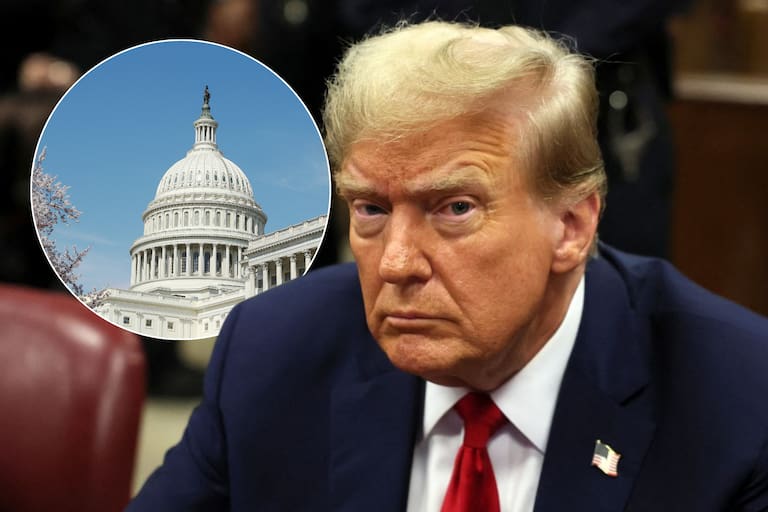
    Donald Trump reaccionó al pedido de impeachment y pidió la ...

    By morning, the atmosphere inside the Capitol was tense. Several lawmakers described a sense of urgency rarely seen outside moments of national crisis. “People were stunned,” said one aide. “Regardless of where you stand, the allegations alone forced everyone to take this seriously.”

    Publicly, some members of Congress moved quickly to demand that Trump step down, arguing that the reported evidence represented a tipping point. “If these claims are accurate, accountability cannot wait,” one lawmaker said during a hastily arranged press conference. Others stopped short of calling for resignation but acknowledged that the situation had reached a new level of intensity.

    At the same time, congressional leadership urged caution, emphasizing that claims must be carefully examined before conclusions are drawn. “We cannot govern by rumor,” one senior figure warned, even as meetings continued behind closed doors.

    What Is the “Nightmare” Evidence?

    Details about the alleged evidence remain closely guarded, fueling speculation across media and political circles. Sources describe it as material that, if substantiated, could raise serious questions about conduct, decision-making, or associations tied to Trump and close allies. Critics argue that its existence alone—combined with the reaction it triggered—suggests potential significance.

    Trump’s allies strongly dispute that characterization. They insist the claims are exaggerated, misleading, or taken out of context, and warn that political opponents are weaponizing uncertainty to create momentum. “We’ve seen this movie before,” one ally said. “Big headlines, anonymous sources, and no proof.”

    Legal analysts caution that without public verification, the true impact of the evidence cannot be assessed. “Reaction does not equal validation,” said one former prosecutor. “But reaction does tell us how high the stakes are perceived to be.”

    Emergency Meetings and Fractures

    Behind the scenes, the reported evidence exposed deep divisions within Congress. Lawmakers debated strategy: whether to call for resignation, pursue formal inquiries, or wait for further clarification. Some argued that moving too quickly could backfire, while others warned that delay would appear weak or complicit.

    “These are the moments that test political courage,” said one veteran lawmaker. “But they also test judgment.”

    Sources say the debates were heated, with raised voices and competing assessments of public opinion. Several members expressed concern about how voters—already fatigued by years of political turmoil—would react to yet another crisis.

    Tổng thống Mỹ Donald Trump nói về năm đầu nhiệm kỳ thành công

    Trump’s inner circle responded with defiance, dismissing calls for resignation as politically motivated. In statements and media appearances, allies framed the situation as a familiar pattern: allegations first, scrutiny later. They argued that Trump remains a central figure for millions of voters and that removing him based on disputed claims would deepen national division.

    “This is not accountability,” one supporter said. “It’s opportunism.”

    Yet even among allies, there are signs of strain. Some Republican figures adopted a more measured tone, emphasizing due process and distancing themselves from definitive defenses. Analysts say that subtle shift reflects concern about being caught on the wrong side of rapidly evolving public sentiment.

    Analysts See a Possible Turning Point

    Political analysts note that moments like this often hinge less on the evidence itself and more on how momentum builds. “Crises reach tipping points when reactions snowball,” said one analyst. “Once lawmakers start using words like ‘nightmare,’ it changes the frame.”

    Markets and international observers are also watching closely. Prolonged instability at the center of U.S. politics can ripple outward, affecting confidence and diplomacy. Allies abroad, analysts say, are wary of sudden shifts in leadership or policy focus driven by domestic turmoil.

    Public Reaction: Shock, Skepticism, and Fatigue

    Public response has been mixed. Social media platforms lit up as headlines exploded online, with supporters and critics trading accusations at lightning speed. Some Americans expressed shock and demanded transparency; others voiced skepticism, warning against drawing conclusions from leaks or anonymous claims.

    “There’s a real sense of exhaustion,” said one pollster. “People want clarity, not constant crisis.”

    Still, the intensity of the conversation suggests that the story has tapped into deeper anxieties about trust, power, and accountability at the highest levels of government.

    Congress DEMANDS Trump STEP DOWN After NIGHTMARE Evidence ...

    The coming days will be decisive. Lawmakers must decide whether to escalate calls for resignation, initiate formal proceedings, or slow the process to allow for verification. Investigators may examine the origins of the reported evidence, while legal teams prepare for potential challenges.

    For Trump, the pressure is mounting, even as he and his allies push back. For Congress, the moment represents a high-stakes test of judgment and restraint. And for the country, it is another reminder of how quickly uncertainty can dominate the political landscape.

    One thing is certain: Washington is bracing for what comes next. Whether this episode fades under scrutiny or becomes a defining chapter in modern political history will depend on facts yet to be fully revealed—and on how leaders choose to act under extraordinary pressure.

  • Trump Cabinet ROCKED by Sudden Resignation Over “Serious Ethical Concerns”!

    Trump Cabinet ROCKED by Sudden Resignation Over “Serious Ethical Concerns”!

    In a development that has sent shockwaves through American politics, David Lebrick—a veteran official with 35 years of service at the Treasury Department—has decided to resign.

    The reason behind his departure is more than a routine personnel change; it exposes a harsh reality regarding the operation of Trump’s second term: the rise of billionaire influence and the collapse of national security protocols.

    1. The Flight of the “Gatekeepers”

    David Lebrick was not a political appointee. He was a career professional who spent his life protecting the U.S. Treasury’s payment systems—systems that process over $1 billion annually. His resignation on January 31, 2025, serves as a “red alert” indicating a severe fracture between professional expertise and political ambition.

    The true catalyst for Lebrick’s exit was the aggressive interference from Elon Musk’s team within the Department of Government Efficiency (DOGE). These operatives reportedly attempted to access sensitive government computer systems to “hunt for fraud” without following any established security protocols. When Lebrick said “No,” he was pushed out.

    2. The Ghost of “Efficiency” or Billionaire Recklessness?

    Elon Musk and the DOGE department were marketed as the keys to streamlining the federal government. However, the unfolding reality suggests the opposite. Musk’s team is operating as if they own the government, bypassing security checks and sensitive data access protocols.

    Lebrick understood that security protocols exist to protect taxpayer money and national security. Allowing unauthorized outsiders access to financial systems poses a catastrophic risk of data breaches. Yet, in the current Trump administration, loyalty to Musk appears to outweigh system safety.

    3. The Domino Effect: When Musk’s Own Staff Quit

    The chaos is not limited to veteran career officials. Just weeks after Lebrick’s departure, over 20 staff members from the DOGE department itself submitted their resignations. They expressed concerns that they were being asked to dismantle public services irresponsibly and were creating severe security vulnerabilities.

    When the very people hired to execute the “efficiency mission” become terrified by the recklessness of their superiors, it is the clearest evidence of an administration operating out of control. These employees stated they refused to participate in activities that could harm the American people.

    4. The Big Picture: The Dissolution of Federal Agencies

    The wave of resignations is spreading across critical agencies beyond the Treasury:

    • FDA (Food and Drug Administration): A senior official resigned after the administration cut 80% of the staff in his division, citing a blatant disregard for food safety. He noted that the administration prioritized budget cuts over the enforcement of safety regulations.
    • Homeland Security (DHS): Acting Secretary Chad Wolf also departed, citing recent events and controversies surrounding the legal validity of authority within the administration.
    • Transportation and Education: Figures such as Elaine Chao and Betsy DeVos have also joined the list of those abandoning the “Trump ship” in frustration.